As the blessed month of Dhul Hijjah approaches, Muslims around the world prepare for the holiest season in the Islamic calendar. At Dar ul Jannah Islamic Center, we believe in helping our community understand and prepare for these sacred days.
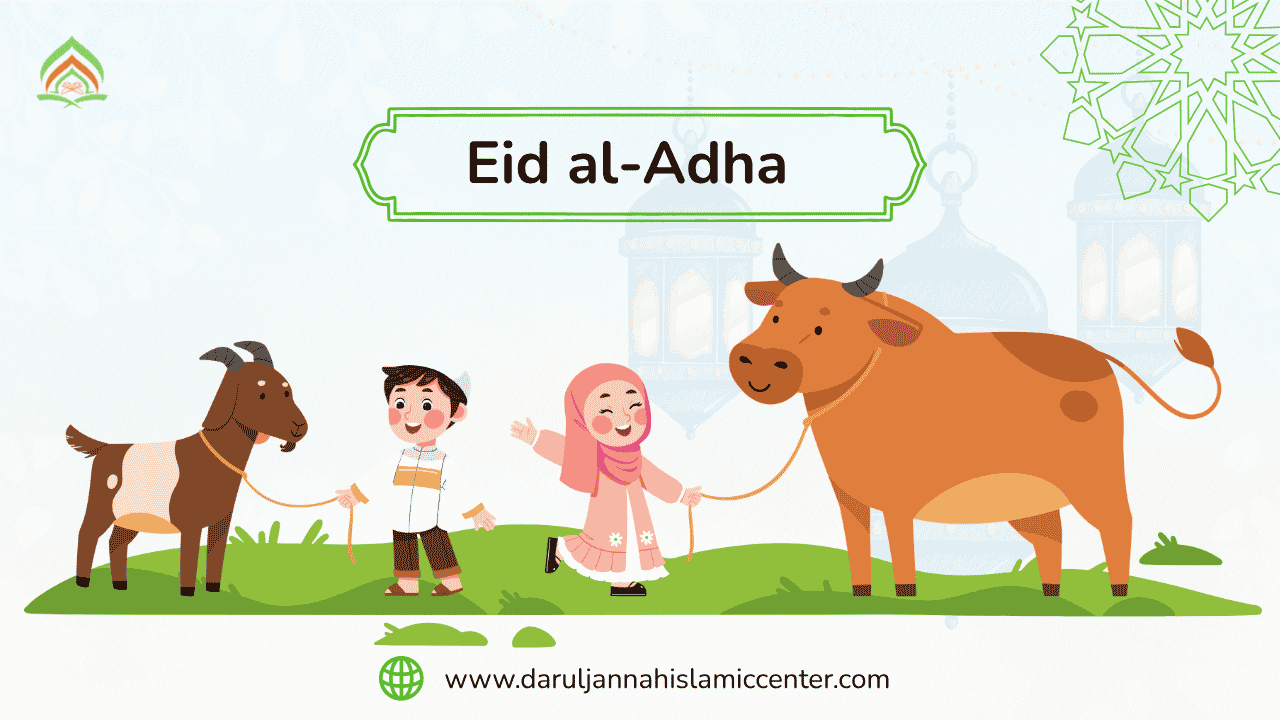
Eid al-Adha 2026 is expected to begin on Wednesday, May 27th, 2026, depending on the sighting of the crescent moon. This “Festival of Sacrifice,” also known as Bakra Eid or the Greater Eid, follows the completion of the annual Hajj pilgrimage and commemorates the unwavering faith of Prophet Ibrahim (AS).
What is Eid al-Adha?
It is one of the two major Eids celebrated by Muslims worldwide. It honors Prophet Ibrahim’s (AS) willingness to sacrifice his son Prophet Ismail (AS) in complete obedience to Allah’s command. Before the sacrifice could take place, Allah (سُبْحَانَهُ وَتَعَالَى) miraculously replaced Ismail (عَلَيْهِ ٱلسَّلَامُ) with a ram, honoring Ibrahim’s devotion.
When is Eid al-Adha 2026? Key Dates to Remember
Since the Islamic calendar follows the lunar cycle, exact dates depend on the sighting of the moon. Based on astronomical calculations, here are the expected dates for 2026:
- 1st Dhul Hijjah begins: Monday, May 18th, 2026
- Day of Arafah (9th Dhul Hijjah): Tuesday, May 26th, 2026
- Eid al-Adha (10th Dhul Hijjah): Wednesday, May 27th, 2026
- Days of Tashriq: May 27th — May 30th, 2026
Note: These dates are tentative and subject to the official crescent moon sighting by local religious authorities.
The Sacred First 10 Days of Dhul Hijjah
The first ten days of Dhul Hijjah are among the most blessed days in the sight of Allah (سُبْحَانَهُ وَتَعَالَى). In fact, they are considered even more virtuous than the days of Ramadan (aside from Laylatul Qadr).
The Prophet Muhammad (صَلَّى اللَّهُ عَلَيْهِ وَسَلَّمَ) said:
“No good deeds done on other days are superior to those done on these (first ten days of Dhul Hijjah).”
— (Sahih Bukhari: 969)
Recommended acts of worship during these 10 days:
- Fasting: Fast the first 9 days, especially the Day of Arafah
- Dhikr & Takbeer: Recite SubhanAllah, Alhamdulillah, Allahu Akbar frequently
- Quran Recitation: Increase your daily Quran reading
- Charity (Sadaqah): Give generously to those in need
- Repentance (Istighfar): Seek forgiveness for your sins
- Qurbani Preparation: Arrange your sacrifice in advance
The Day of Arafah — A Day Like No Other (May 26th, 2026)
The 9th day of Dhul Hijjah is known as the Day of Arafah. This is the most important day of the entire Islamic year. It is the day when pilgrims gather on the plains of Arafat, making supplication to Allah. For those not performing Hajj, fasting on this day carries immense reward.
The Prophet Muhammad (صَلَّى اللَّهُ عَلَيْهِ وَسَلَّمَ) said:
“Fasting on the Day of Arafah expiates the sins of the previous year and the coming year.”
— (Sahih Muslim: 1162)
What to do on the Day of Arafah (May 26th, 2026):
- Fast from dawn to sunset (if not performing Hajj)
- Increase your duas (supplications) — this is a day when duas are readily accepted
- Recite the Takbeer of Tashriq loudly
- Make sincere repentance for past mistakes
- Give charity to the poor and needy
Sunnah Acts of Eid al-Adha
Following the sunnah of Prophet Muhammad (صَلَّى اللَّهُ عَلَيْهِ وَسَلَّمَ) ensures we receive the full blessings of this blessed day. Here are the recommended acts for Eid day (May 27th, 2026):
- Wake up early before sunrise
- Perform Ghusl (full ritual bath)
- Brush your teeth with a miswak or toothbrush
- Wear your best clean clothes (new if possible)
- Apply perfume (for men)
- Do not eat before Eid prayer — unlike Eid al-Fitr, it is sunnah to eat after the prayer, preferably from the meat of your sacrifice
- Recite the Takbeer aloud on your way to the prayer ground:
Allahu Akbar, Allahu Akbar, La ilaha ill-Allah, wa Allahu Akbar, Allahu Akbar, wa lillah il-hamd - Attend the Eid prayer at your local mosque or Eidgah
- Listen to the Khutbah (sermon) after the prayer
- Take a different route when returning home from the prayer
- Exchange Eid greetings — “Eid Mubarak”, “Taqabbal Allahu minna wa minkum”
- Sacrifice your Qurbani (if financially able)
The Eid al-Adha Prayer — A Step-by-Step Guide
Eid al-Adha prayer consists of two rak’ahs and is performed shortly after sunrise. Here is how it is prayed:
- First Rak’ah: Make intention, say Allahu Akbar to begin (Takbirat-ul-Ihram). Then say 7 additional Takbeers before reciting Surah al-Fatiha
- Second Rak’ah: Stand up, say Allahu Akbar, then say 5 additional Takbeers before reciting Surah al-Fatiha
- After Prayer: Listen attentively to the Imam’s Khutbah (sermon)
Important: There is no Adhan or Iqamah for Eid prayer. This has been clearly established in authentic hadith (Sahih Muslim: 885).
Qurbani (Sacrifice) — Rules and Significance
Qurbani refers to the ritual sacrifice of an animal on Eid al-Adha. It commemorates the sacrifice of Prophet Ibrahim (عَلَيْهِ ٱلسَّلَامُ) and is a confirmed sunnah (or wajib according to the Hanafi madhab) for every adult Muslim who possesses the Nisab (wealth threshold).
When can Qurbani be performed?
The sacrifice is valid only during the specified days:
- 10th Dhul Hijjah (Eid day) after the Eid prayer
- 11th, 12th, and 13th Dhul Hijjah (Days of Tashriq)
If an animal is sacrificed before the Eid prayer, it must be repeated.
What animals are permissible?
- Sheep: 6 months (1 year preferred) — 1 share per animal
- Goat: 1 year — 1 share per animal
- Cow/Buffalo: 2 years — 7 shares per animal
- Camel: 5 years — 7 shares per animal
Conditions for a valid sacrifice:
- The animal must be healthy and free from defects (no blindness, lameness, or illness)
- The sacrifice must be done for Allah alone
- The person sacrificing should say “Bismillah, Allahu Akbar”
- You may slaughter with your own hands or appoint someone else — but it is recommended to witness the sacrifice
Distribution of Qurbani Meat:
According to the sunnah, the meat should be divided into three equal parts:
- One-third: Your own family
- One-third: Relatives, friends, and neighbors
- One-third: The poor and needy
“Eat some, store some, and give some in charity.”
— (Hadith | An-Nasa’i)
Rules for Those Intending to Offer Qurbani
If you plan to offer a sacrifice on Eid al-Adha, there are specific rules you must follow:
- From the 1st of Dhul Hijjah (expected May 18th, 2026) until after your sacrifice is completed, do not remove any hair, nails, or skin
- This ruling applies only to the person offering the sacrifice, not to other family members
Evidence: The Prophet Muhammad (صَلَّى اللَّهُ عَلَيْهِ وَسَلَّمَ) said:
“When the ten days (of Dhul Hijjah) begin, and one of you intends to sacrifice, let him not remove anything from his hair or skin.”
— (Sahih Muslim: 1977)
What is the Difference Between Eid al-Fitr and Eid al-Adha?
Many Muslims often ask about the differences between the two Eids. Here is a quick comparison:
- When: Eid al-Fitr is on 1st Shawwal, while Eid al-Adha is on 10th Dhul Hijjah
- What it follows: Eid al-Fitr follows completion of Ramadan; Eid al-Adha follows completion of Hajj
- Eating before prayer: For Eid al-Fitr, it is sunnah to eat before (dates); for Eid al-Adha, it is sunnah to eat after (from sacrifice)
- Sacrifice: No sacrifice for Eid al-Fitr; Qurbani is performed for Eid al-Adha
- Zakat: Zakat al-Fitr (Fitrana) is paid for Eid al-Fitr; no Fitrana for Eid al-Adha
- Duration: Eid al-Fitr is 1 day; Eid al-Adha is 3-4 days
Frequently Asked Questions (FAQs)
Make the Most of Eid al-Adha 2026
As we prepare for Eid al-Adha 2026, let us remember that this blessed occasion is more than just celebration. It is a time to:
- Strengthen our relationship with Allah through increased worship
- Help the less fortunate through charity and Qurbani
- Unite with family and community in joy and gratitude
- Reflect on the obedience of Prophet Ibrahim (عَلَيْهِ ٱلسَّلَامُ) and apply that spirit of submission in our own lives
At Dar ul Jannah Islamic Center, we pray that Allah (سُبْحَانَهُ وَتَعَالَى) accepts your good deeds, your sacrifices, and your duas. May this Eid bring peace, blessings, and spiritual growth to you and your family.
Eid Mubarak to you and your loved ones!
Taqabbal Allahu minna wa minkum (May Allah accept from us and from you).