Islam beautifies every part of life, including the moments during a meal. While the dua before eating begins with Allah’s name, supplications while eating are spontaneous expressions of gratitude to الله (Allah) for His ongoing blessings. These are moments to recognize His favor and increase our awareness of His presence.
The Recommended Dua and Praise During Eating
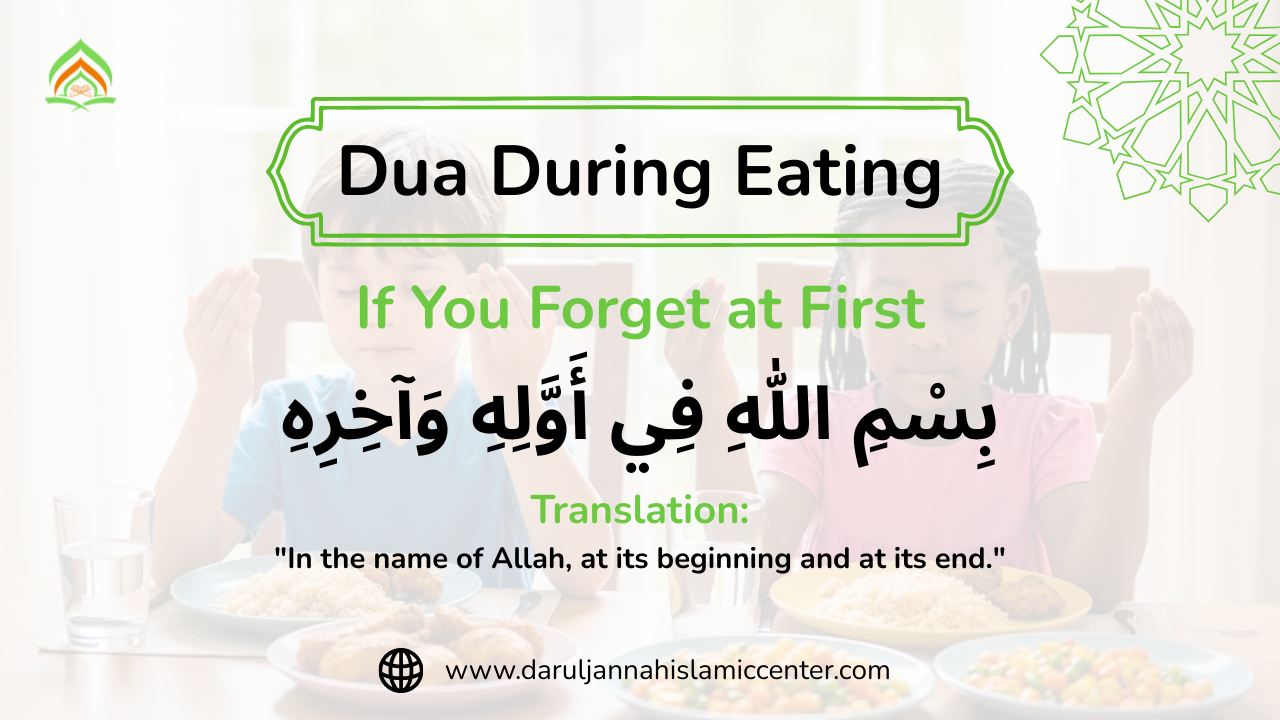
There isn’t a single prescribed “middle eating dua” from the Sunnah in the same way as the opening “Bismillah.” Instead, the practice is to verbally express praise and gratitude to Allah while eating.
1. The General Praise:
- Arabic: الْحَمْدُ لِلَّهِ
- Transliteration: “Alhamdulillah”
- English Translation: “All praise is for Allah.”
2. Praising Allah When Something Pleasing is Noticed:
If you taste something especially delicious or are pleased with the food, it is recommended to praise Allah verbally.
Simple Hadiths About Gratitude During Meals
- Prophet’s ﷺ Constant Practice:
The Messenger of Allah ﷺ said: “Indeed, الله is pleased with a servant who eats a meal and praises Him for it, or drinks a drink and praises Him for it.”
(Sahih Muslim 2734) - Combining Praise with the Opening Remembrance:
Abu Umamah (رضي الله عنه) reported: Whenever the Prophet ﷺ finished a meal, he would say: “Alhamdulillahi hamdan kathiran taiyiban mubarakan fihi, ghayra [makfiyyin wa la] muwaddain, wa la mustaghnananhu, Rabbana.”
(Translation: “All praise is for Allah, abundant, pure, and blessed praise. [A praise] that is neither abandoned nor discarded, nor is it dispensed with, our Lord.”)
While this was said after eating, it exemplifies the spirit of continuous gratitude that should accompany the meal. *(Sahih al-Bukhari 5458)* - The Comprehensive Formula:
Mu’adh ibn Anas (رضي الله عنه) reported that the Messenger of Allah ﷺ said: “Whoever eats some food and then says: ‘Alhamdulillahi alladhi at`amani haadha wa razaqanihi min ghayri hawlin minni wa la quwwatin’ (All praise is for Allah who fed me this and provided it for me without any effort or power on my part), his past sins will be forgiven.”
*(Sunan al-Tirmidhi 3458, graded Hasan)*
Summary and Key Principles for During the Meal
- Continuous Gratitude: The core practice is to maintain a heart full of shukr (gratitude) to الله.
- Verbal Praise: Express this gratitude spontaneously with phrases like “Alhamdulillah.”
- Avoid Criticism: It is from the Sunnah not to criticize food. If you like it, eat it; if you dislike it, simply leave it without speaking ill of it.
- Mindful Consumption: Eating becomes an act of worship when done with remembrance of the Provider.
Best Practice & How to Implement
When to Express Gratitude:
Throughout the meal, especially:
- When you take a pleasing bite.
- When you pause between bites.
- When you reflect on the favor of having food.
Simple Practice Ideas:
- The “Alhamdulillah” Pause: Encourage family members to say “Alhamdulillah” aloud at least once during the meal.
- Gratitude Prompt: Place a note on the table reading: “Remember to say Alhamdulillah during your meal.”
- Internal Remembrance: Make it a personal goal to consciously think “Alhamdulillah” in your heart with every few bites.
Final Dua and Conclusion
The spirit of eating in Islam is encapsulated in this comprehensive teaching:
The Prophet ﷺ said: “الله is pleased with His servant who, when he eats a morsel, praises Him for it, or drinks a sip and praises Him for it.”
(Sahih Muslim 2734)
By making our meals a continuous cycle of remembrance beginning with Bismillah, continuing with Alhamdulillah, and ending with praise we transform a daily necessity into a sustained act of worship that draws us closer to الله.
اللَّهُمَّ بَارِكْ لَنَا فِيمَا رَزَقْتَنَا وَاجْعَلْنَا مِنَ الشَّاكِرِينَ
“O Allah, bless us in what You have provided and make us among the grateful.”