
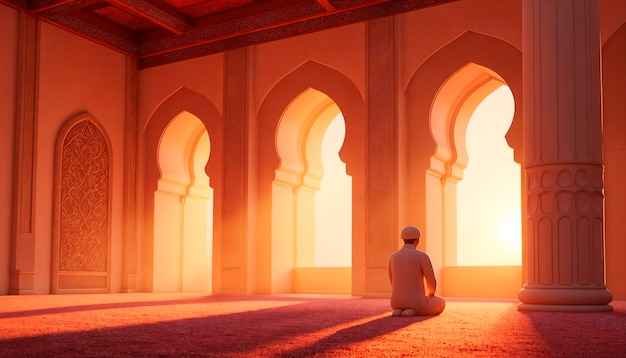
The structure of Islam is built upon a strong, clear foundation known as the Arkan al-Islam, or the Five Pillars of Islam. These are not merely rituals; they are the core acts of worship that define a Muslim’s faith, shape their daily life, and unite the global Muslim community (Ummah) in shared practice and purpose. Together, they create a balanced framework for spiritual growth, social responsibility, and devotion to God.
Here is an in-depth look at each of these essential pillars.
1. Shahada (The Declaration of Faith)
The Shahada is the cornerstone of Islam, the profound statement upon which all belief rests. It is the simplest yet most profound pillar, as its sincere proclamation makes one a Muslim.
- The Statement: “Ashhadu an la ilaha illa Allah, wa ashhadu anna Muhammadan rasulu Allah.”
(I bear witness that there is no god but God, and I bear witness that Muhammad is the Messenger of God.) - Meaning & Significance:
- The First Part (“No god but God”): This affirms the absolute oneness of God (Allah in Arabic). It is a rejection of idolatry and polytheism in all forms, asserting that God alone is worthy of worship.
- The Second Part (“Muhammad is His Messenger”): This acknowledges that Prophet Muhammad (peace be upon him) is God’s final messenger and the human example to follow. It means accepting his teachings (the Sunnah) as the authentic guide for living according to God’s will.
The Shahada is whispered into the ear of a newborn, recited in daily prayers, and is the ideal last words of a believer. It is the constant reminder of a Muslim’s core belief.
2. Salah (The Ritual Prayer)
Salah is the mandatory ritual prayer performed five times a day at prescribed times: dawn (Fajr), midday (Dhuhr), afternoon (Asr), sunset (Maghrib), and night (Isha). It is a direct, personal connection between the worshipper and God.
- Practice: Muslims perform ablution (Wudu) for purification, face the Kaaba in Mecca (Qibla), and follow a specific sequence of standing, bowing, prostrating, and sitting while reciting verses from the Quran and praises to God.
- Significance: Salah acts as a spiritual “reset” throughout the day. It disrupts worldly affairs, fosters discipline, humility, and gratitude. The physical act of prostration symbolizes total submission. It is a constant reminder of God’s presence and a shield against wrongdoing.
3. Zakat (The Obligatory Almsgiving)
Zakat is not voluntary charity; it is a mandatory annual donation of 2.5% of one’s surplus wealth and assets to support those in need. It purifies one’s wealth by acknowledging that all provisions come from God and that the affluent have a duty to the less fortunate.
- Recipients: The Quran specifies eight categories of recipients, including the poor, the needy, those in debt, travelers, and those administering the funds.
- Significance: Zakat is a powerful social and economic instrument. It combats poverty, reduces inequality, and fosters empathy and social solidarity. It purifies the giver’s heart from greed and selfishness, reinforcing the Islamic principle that wealth is a trust from God to be used responsibly.
4. Sawm (Fasting during Ramadan)
Sawm is the annual obligation to abstain from food, drink, smoking, and marital relations from dawn to sunset each day for the entire lunar month of Ramadan.
- Practice: The fast begins with a pre-dawn meal (Suhoor) and is broken at sunset with a meal (Iftar). Beyond physical abstinence, fasting is also about spiritual discipline—curbing anger, foul speech, and negative thoughts.
- Significance: Sawm cultivates God-consciousness (Taqwa), self-discipline, patience, and gratitude. By experiencing hunger and thirst, it builds empathy for the poor. Ramadan is also a time for intensified prayer, Quranic reflection, and community bonding through shared Iftar meals.
5. Hajj (The Pilgrimage to Mecca)
Hajj is the pilgrimage to the holy city of Mecca, Saudi Arabia, that every financially and physically able Muslim must perform at least once in their lifetime. It takes place during the specific days of the Islamic month of Dhul-Hijjah.
- Rituals: Pilgrims perform a series of rites over several days, including circumambulating the Kaaba (Tawaf), walking between the hills of Safa and Marwah (Sa’i), standing in prayer on the plain of Arafat, and symbolic stoning of pillars representing evil.
- Significance: Hajj is the ultimate act of worship and submission. It commemorates the trials and faith of Prophet Abraham (Ibrahim) and his family. It powerfully demonstrates the unity and equality of the Muslim Ummah, as millions from every race, nationality, and social class stand together before God, dressed in simple white garments, with no distinction between them.
A Unified Framework for Life
The Five Pillars of Islam are interconnected, creating a complete way of life. The Shahada establishes belief in the heart, Salah puts it into daily practice, Zakat extends it to society, Sawm strengthens self-control and empathy, and Hajj embodies the culmination of a lifetime of faith on a global scale.
Together, they balance the spiritual with the practical, the individual with the communal, and belief with action. They are the enduring framework that has guided Muslims for over fourteen centuries, providing a clear path for worship, personal development, and building a just and compassionate society.
